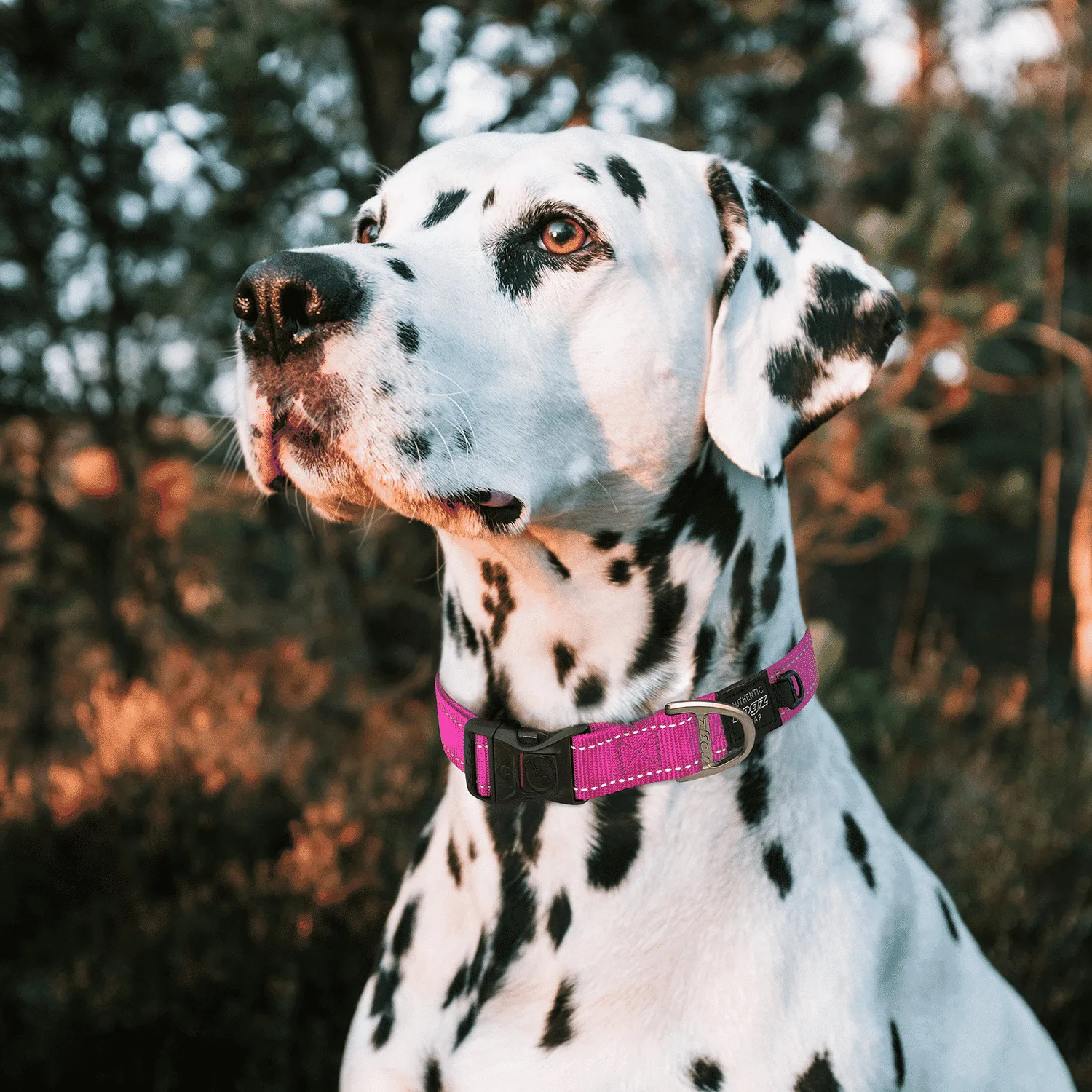
What to confirm
- Measure the neck where the collar will sit
- Allow a secure but comfortable fit
- Inspect stitching and hardware frequently
- Use identification tags without overloading the D-ring
Practical decision notes
A flat collar is useful for identification and ordinary handling, but it does not solve pulling by itself. Dogs with respiratory, neck or escape risks may need a properly fitted harness and a training plan. Recheck fit as puppies grow or body condition changes.
How we prepared this reference
We retained the established Leader Pet Supplies URL and checked the historical catalogue description against the named manufacturer or an authoritative Australian source where available. Product formulations, instructions, packaging and stock change, so the current label and manufacturer directions take priority.
When professional advice matters
Equipment and food choices cannot diagnose illness. Seek a veterinarian experienced with the relevant species for persistent appetite changes, pain, breathing difficulty, abnormal behaviour, weight loss or other health concerns. In an emergency, contact a veterinary service promptly.
Source
Primary or authoritative reference used for this page. Reviewed 24 September 2026.