
Cow Ears, Pig Trotters and Rawhide: A Safer Chew Checklist
Compare hardness, size, fat and the dog’s chewing style before choosing an animal-derived chew.
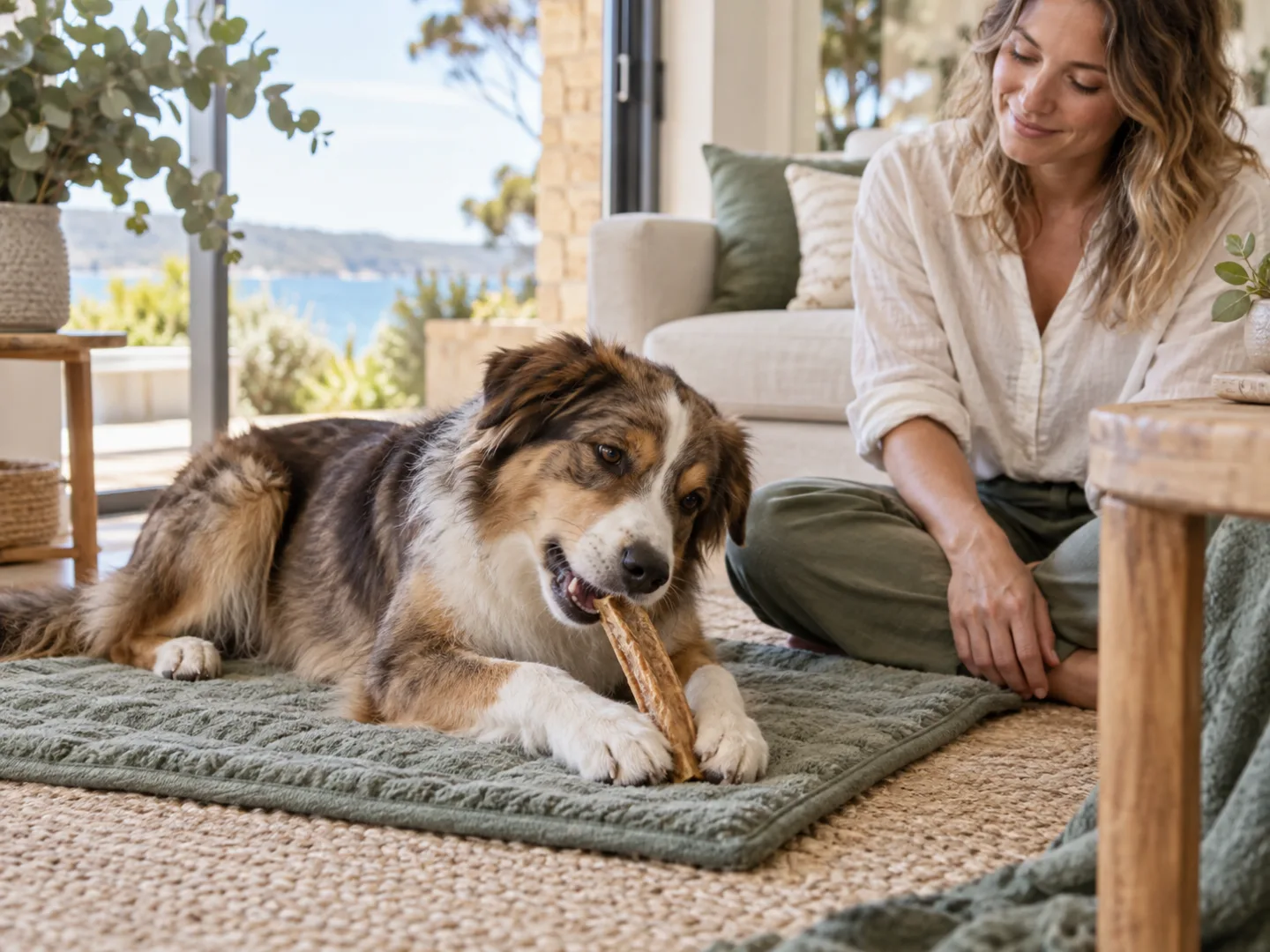
It answers the immediate buying or care decision first, then explains evidence, trade-offs, a concrete example and the point at which professional advice is more appropriate than another product.
There is no risk-free chew
Chewing can occupy a dog and may help redirect behaviour, but every edible chew presents trade-offs. Pieces can be swallowed, hard material can fracture teeth, rich treats can upset digestion and animal-derived products require hygienic handling. “Natural” describes origin, not safety. The useful question is whether a particular product is appropriate for a particular dog under supervision.
Compare the formats
Cow ears are often thinner and may be lower in fat than pig ears, but natural variation is substantial. Pig trotters are dense and hard; a determined crusher may damage a tooth or break off a large piece. Rawhide softens as it is chewed and can form swallowable strips or plugs. None should be selected by breed label alone. Look at the actual piece, the dog’s mouth and its past behaviour.
Use the size-and-style test
Choose a chew that cannot fit wholly behind the dog’s front teeth at the start of the session. During the first five minutes, observe whether the dog scrapes gradually, tries to crack the item with the back teeth, or attempts to gulp it. A calm gnawer and a powerful gulping dog need different products. Remove the chew as soon as the remaining piece becomes small enough to swallow or develops a sharp edge.
Account for the whole diet
Treat calories count. A large animal-derived chew can materially change daily intake and may be unsuitable for dogs with pancreatitis history, gastrointestinal disease, allergies or a prescribed diet. A worked example: if a small dog receives training treats throughout the day, adding a whole ear is not “free” enrichment. Reduce other extras and ask a veterinarian how to keep the complete diet balanced.
Handle and store hygienically
Keep the product dry, follow the package storage instructions and wash hands after handling. Clean the surface where the chew was used, especially in homes with young children, older adults or immunocompromised people. The Australian Government notes that imported pet foods, treats and chews are subject to biosecurity controls; retain the original label so the product and batch can be identified if a recall or problem arises.
When to stop
Remove a chew if the dog coughs, gags repeatedly, vomits, develops diarrhoea, guards the item dangerously or damages a tooth. Difficulty breathing, collapse, persistent retching, abdominal pain or suspected obstruction needs urgent veterinary attention. A chew should be enrichment, not a test of how quickly a dog can finish it.
Match the chew to the household
Supervision means being close enough to intervene, not leaving the dog with a chew while everyone is out. Multi-dog homes may need physical separation to prevent guarding and hurried swallowing. Children should not take chews from dogs. Put down a washable mat, offer a predictable short session and trade the remaining item calmly for another reward. If the dog becomes tense when approached, seek qualified behaviour help instead of repeatedly testing its tolerance.
A practical buying comparison
Compare two real pieces rather than two marketing descriptions. Look at thickness, brittleness, sharp cut surfaces, odour, package integrity, country-of-origin information and whether the batch can be traced. Choose a smaller package first when trying a new format. After the session, check gums and teeth and note how long the chew lasted. A product that disappears in seconds, creates large fragments or causes digestive upset is not good value for that dog even if its shelf price is low. Keep the packaging until the chew is finished so you can identify the batch if a problem occurs. Rotate enrichment methods instead of assuming every session needs an edible item: sniffing games, food-dispensing toys and training can occupy the dog without adding the same dental, obstruction or calorie risks. The safest choice may be a different activity entirely. Review the choice as the dog ages.
Sources and review
Sources were checked on 24 September 2026. This guide provides general information, not veterinary diagnosis or a substitute for the current product label.