
Brine Shrimp, Bloodworm or Pellets: Choosing Fish Food
Match food format to species, life stage and water quality instead of relying on one “favourite” food.
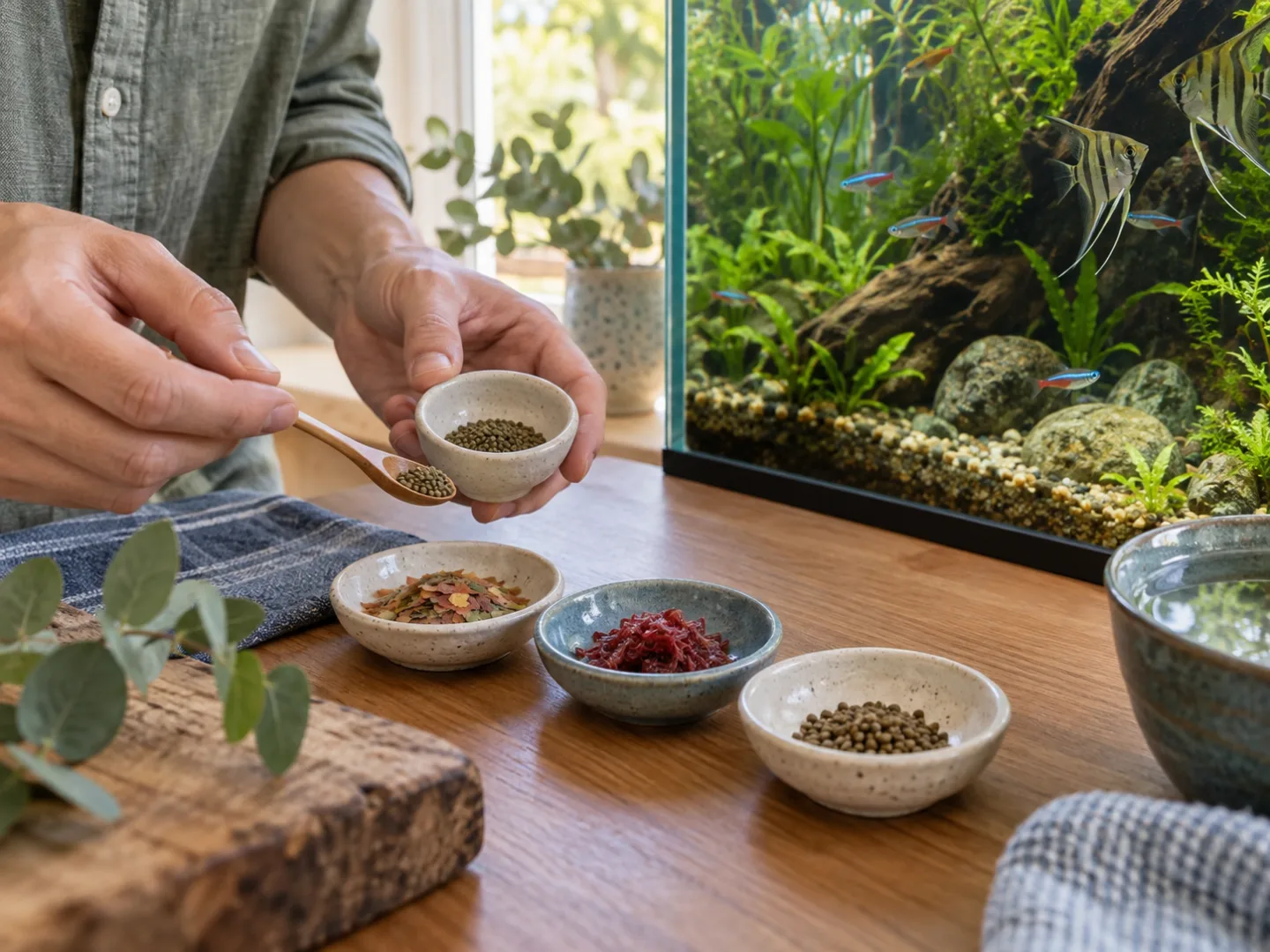
It answers the immediate buying or care decision first, then explains evidence, trade-offs, a concrete example and the point at which professional advice is more appropriate than another product.
The short answer
Use a nutritionally complete food formulated for the species as the dependable base where one is available, then use brine shrimp or bloodworm selectively for variety, conditioning or a specific feeding response. Neither frozen food nor a single treat ingredient automatically provides a complete long-term diet. The right choice depends on mouth size, feeding zone, age, health and how much uneaten food the filter can handle.
What brine shrimp are good at
Artemia are useful because many fish recognise their movement and shape as food. Newly hatched brine shrimp are small enough for many fry, while frozen or larger forms can suit adult community fish. Their value changes with life stage and enrichment, so “brine shrimp” is not one fixed nutritional product. Check whether the pack is live, frozen, freeze-dried or eggs, and follow storage directions. Imported aquatic feeds also sit within Australia’s biosecurity framework, which is why buying clearly labelled product from an established supply chain matters.
Where bloodworm fit
Bloodworm can trigger feeding in fish that ignore dry food and can add variety, but portion size matters. A cube designed for a larger aquarium can overwhelm a small tank. Thaw only what is required using clean tools, avoid pouring excess thaw water into the aquarium when the product instructions advise otherwise, and remove leftovers. People who react to bloodworm should minimise skin and airborne exposure and choose an alternative food.
Why pellets are often the anchor
A reputable species-appropriate pellet provides repeatable portioning and can be formulated to supply a broader nutrient profile than a single prey item. Pellet size and buoyancy should suit how the fish feeds. A surface-feeding betta may ignore food that sinks immediately, while bottom-feeding species need access before faster tankmates take everything. Soak only when the manufacturer recommends it; unnecessary soaking can leach nutrients and make portions harder to judge.
Worked feeding example
Consider one adult betta in a heated, filtered aquarium. Instead of dropping in a full frozen cube, feed a small measured amount of its normal complete food and offer a modest brine-shrimp or bloodworm portion occasionally. Watch whether the fish finishes within a short period and remove excess. If nitrate rises or debris accumulates, reduce total input and review maintenance rather than adding another cleaner fish. The example is a method, not a universal ration: follow the current food label and adjust for the individual animal.
Common warning signs
Repeated refusal to eat, weight loss, swelling, abnormal faeces, rapid breathing or difficulty swimming are not problems to solve by cycling through more treats. Check water quality and temperature immediately and seek qualified aquatic-veterinary advice when signs persist. Food choice cannot compensate for an uncycled tank or unsuitable water.
Build a feeding record
For one week, record the food type, approximate portion, whether it floated or sank, how quickly it was eaten and any leftovers removed. Pair that log with temperature and water-test results. This simple method distinguishes preference from a husbandry problem and prevents several family members feeding the same fish. Photograph each food label so ingredients and batch details are retained. When changing products, change one variable at a time; otherwise a positive or negative response cannot be interpreted confidently.
Storage and cross-contamination
Keep frozen fish food in a sealed, labelled container separate from household meal-preparation surfaces. Use dedicated tools, wash hands and follow the package after-opening directions. Dry foods lose quality when repeatedly exposed to moisture and heat, so decant only when batch and expiry information remain available. Live foods need their own water-quality and biosecurity consideration; never release unused organisms or water outdoors. The best food is not only nutritionally suitable—it is also one the keeper can portion, store and use hygienically without degrading aquarium conditions. When several aquariums are maintained, use separate pipettes or rinse tools deliberately to avoid moving water, medication or pathogens between systems. Date opened frozen packs and discard anything with damaged packaging, thaw history that cannot be confirmed or an abnormal odour. These ordinary controls protect both fish and people better than relying on appearance alone.
Sources and review
Sources were checked on 24 September 2026. This guide provides general information, not veterinary diagnosis or a substitute for the current product label.